Products in the Draining or Filtering lines have tested and verified permeable capacity. Compared with other drainage solutions, they allow rainwater infiltration into the subsoil and compliance with CAM permeability requirements and the principle of hydraulic invariance. That of water, is a fundamental natural cycle to safeguard the thermoregulation of the planet, the mitigation of extreme heat or cold, ventilation and, more generally, environmental well-being. Continued urbanization added to water bombs resulting from climatic variations in recent years has caused several problems related to stormwater runoff leading to consequent disruption and flooding. The term “hydraulic invariance” refers to “maintaining unchanged pre and post urbanization stormwater absorption.” For several years now, regulations have come into effect in different regions to comply with this principle. One of the solutions identified is the use of permeable pavements, which allow the passage of water, which quickly reaches the subsoil. RECORD has been producing outdoor draining pavements for more than forty years; moreover, with the exclusive mixture of the DRENOPAV™ line, we have been pioneers in Italy in the creation of draining pavements made with porous concrete, commonly known as filtering pavements. The use of these draining and/or filtering pavements for the realization of outdoor surfaces allows the proper filtration of water in the lower layers of the pavement and subgrade so as to avoid the waterproofing of soils and, in this way, ensure the well-being of the environment and humans. All RECORD draining pavements have a certificate of 100% permeability
Drainage paving
Drainage paving
BAGATTINI RECORD DRAINING FLOORS, 100% WATER PERMEABLE
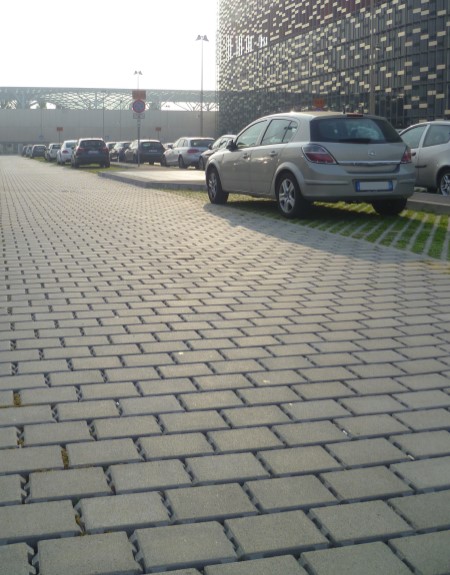
Quality and high performance in materials, wide range of products and colors
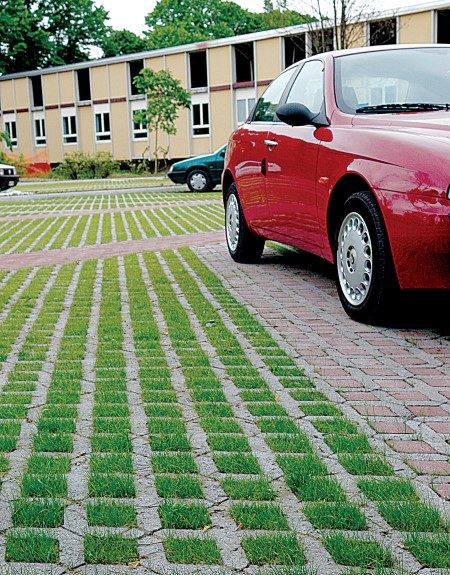
WHAT ARE THE BENEFITS OF FILTER FLOORING?
Permeable pavements help restore a natural hydrologic balance and reduce runoff volume by trapping and slowly releasing precipitation into the ground instead of allowing it to runoff into storm drains and receiving waters as effluent. Permeable pavement can reduce the concentration of some pollutants either physically (by trapping them in the pavement or soil), chemically (bacteria and other microbes can break down and use some pollutants) or biologically (plants growing between some types of RECORD pavements can trap and store pollutants). By slowing down the process, permeable pavements can cool the temperature of the urban environment, reducing the stress and impact on the environment of waterways or lakes. By controlling runoff at the source, permeable pavement can also reduce the need for or required size of storage systems such as lamination ponds, expansion basins, dispersal ditches
Environmental well-being
- Summer ambient heat mitigation effect
- Makes rainwater available for plant maintenance
Better management of rainwater
- Groundwater maintenance
- Ensures the improvement of the environment in relation to the water cycle
- Reduces runoff to streams (resulting in less susceptibility of streams to flood phenomena)
Lower costs of managing drainage networks
- Reduces the conveyance of dirt and foliage into storm drains (which cause flooding)
- Reduces sewer overloads, particularly during storm events
- Reduces the load at the treatment stations where they convey sewage systems, resulting in an increase in their efficiency
Comfort and Safety for People
- Virtual absence of puddles
- Road Safety (no aquaplaning)
Filtration of surface pollutants and protection of groundwater
WHAT ARE THE TYPES OF DRAINAGE PAVEMENTS?
- Filter Floors DRENOPAV
Modular elements made of porous filter concrete. The concrete constituting the screed is made from a specific mixture, which has a pre-determined porosity. As a result of this production process, the entire pavement becomes draining, while remaining completely self-blocking and, most importantly, maintaining a continuous surface. - Floors with oversizedspacers
RECORD has developed specific screeds with oversized spacers that, in addition to their drainage property, also retain excellent self-blocking and load bearing capacity. These concrete screeds are made with oversized spacer profiles so that once laid, they create wide joints between them that can drain rainwater. Obviously, the drainage capacity increases as the ratio of joint surface area to slab surface area increases. With this type of paving, it is good to carefully consider the shape of the element to be used, which, if not specially designed, can compromise the bonding characteristic inherent in self-locking paving stones. - Turfgrass gratings
Gridded elements are perforated plates, usually square or rectangular, ranging in size from 20 to 50 cm and in thickness from 8 to 11 cm. Their drainage capacity increases proportionally to two factors: the value of the void-to-full ratio of the paving element and the void-filling material.
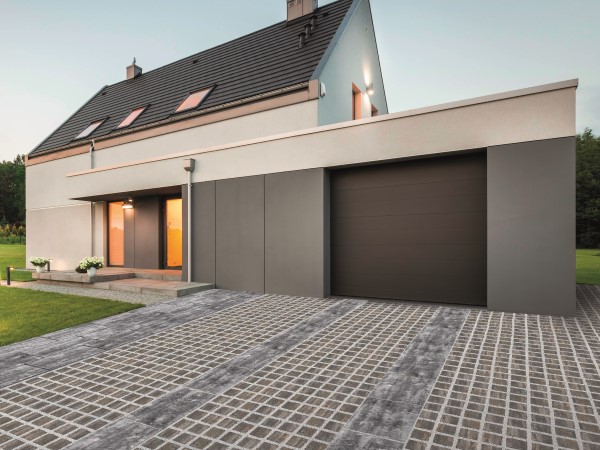
Discover some of the references created with custom-made external flooring by RECORD: